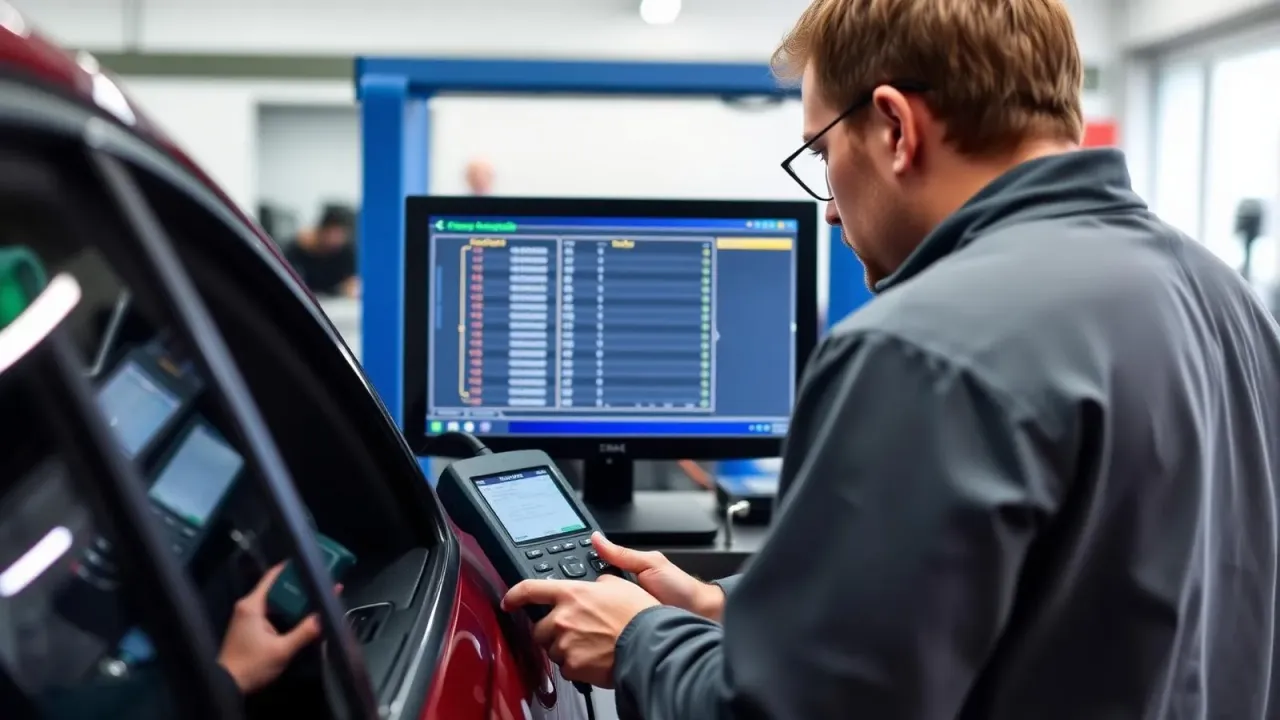
A thermal camera is one of those tools that sounds fancy until you use it for an afternoon, and then you wonder how anyone diagnosed anything without one. We added thermal imaging to the diagnostic bench a few years ago, and it has changed how fast we find a long list of problems that used to take hours of guesswork.
What thermal imaging actually shows
Every part of a running car has a temperature signature. A healthy brake rotor heats evenly. A working catalytic converter glows hot from front to back. A balanced radiator shows a consistent gradient from inlet to outlet. When something is wrong, the heat pattern changes before any other symptom shows up.
The camera does not see anything you could not theoretically figure out with a non-contact pyrometer and patience. It just shows hundreds of points at once, in real time, on a screen. Patterns jump out that you would never notice taking single readings.
Brake problems that hide in plain sight
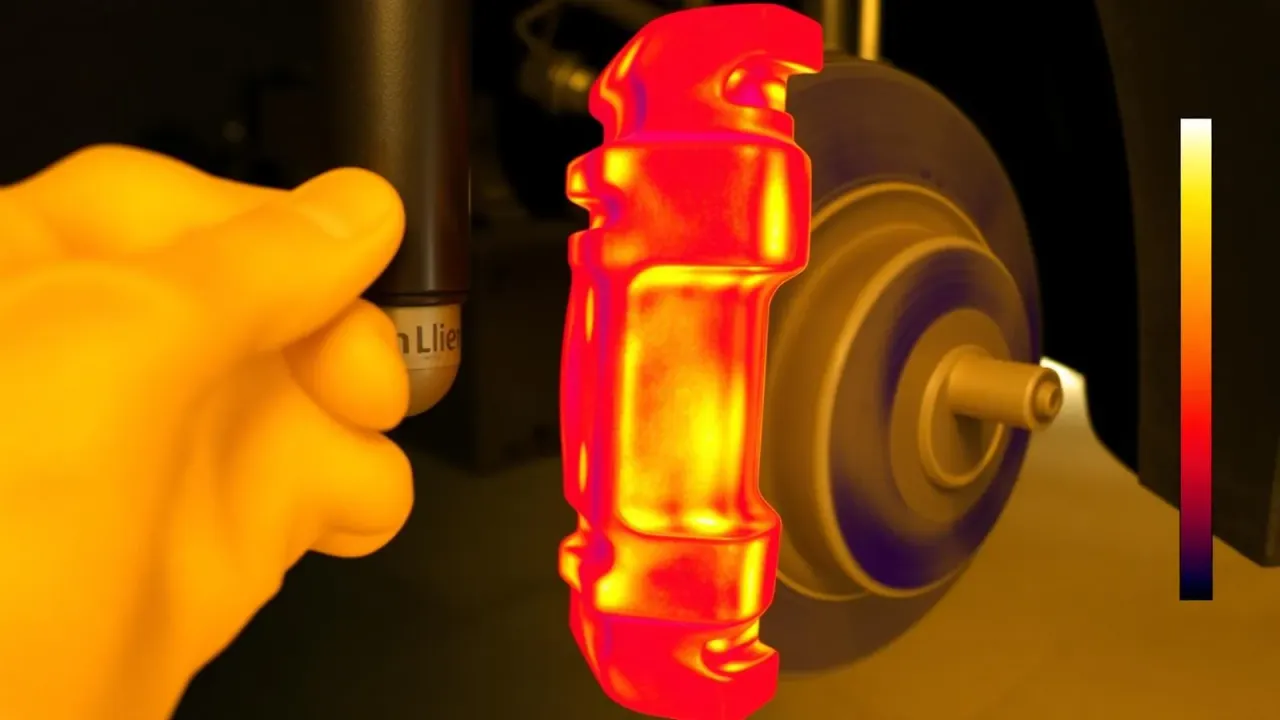
A dragging brake caliper is the textbook thermal-imaging find. The driver describes "the car pulls a little when I let off" or "the front right wheel smells funny after a long drive." On the road, the symptom can be subtle. On the camera, the bad rotor is 200 degrees hotter than its neighbor after a single test loop. Done.
Pad transfer and uneven wear
Thermal imaging also catches uneven pad-to-rotor contact, which causes the high-frequency vibration drivers describe as "warped rotors" (rotors almost never actually warp). The hot streaks tell you whether the caliper slide pins are seizing, the pads are separating, or the rotor surface needs to be cut.
Misfires you cannot hear
A misfiring cylinder runs colder than its siblings because it is not burning fuel completely. With the camera pointed at the exhaust manifold runners, a dead or weak cylinder shows up immediately. This is huge on cars where pulling spark plugs is a four-hour job (looking at you, certain V8 trucks). We can confirm which cylinder is the problem before we ever pick up a wrench.
Cooling system blockages and head gasket clues
Radiators tell you a lot. Cold spots in the core mean a clogged or collapsed tube. A consistent stripe of cold across the bottom usually means low coolant flow. We have caught failing water pumps, stuck thermostats, and partially-clogged heater cores from across the bay.
On suspected head gasket failures, scanning the coolant overflow tank, the upper radiator hose, and individual exhaust ports tells a story that compression and leak-down testing then confirms.
A/C performance, instantly
An A/C system that is "not as cold as it used to be" is a diagnostic rabbit hole. With the camera, we read evaporator inlet and outlet temperatures, condenser face temperature, and individual vent output across the dash in seconds. Low charge, restricted orifice tube, weak compressor clutch, and bad expansion valves all have distinctive thermal fingerprints.
Most of the hard intermittents become easy the moment you can see heat. The car stops being a black box.
Electrical hot spots and parasitic loads
A loose battery terminal, a corroded ground strap, a starter draw that is twice what it should be. All warm. The camera catches them faster than a multimeter. We have found wiring harnesses with melted insulation behind dashboards, fuse boxes with a single bad relay running 40 degrees hotter than the others, and a customer's mystery dead battery that turned out to be a heated seat element drawing power with the key off.
Exhaust leaks before they fail emissions
A small exhaust leak upstream of the oxygen sensor confuses the computer and can throw fuel trims out of range. Hard to find by ear once it is up to temperature. Easy to find on the camera as a bright fan of heat where the gas is escaping.
The honest part
Thermal imaging is a great first-pass tool. It points the flashlight. It does not replace a scan tool, a smoke machine, a lab scope, or 30 years of pattern recognition. We use it because it makes our diagnostic time faster and more accurate, which means your bill is smaller and we are right the first time. That is the whole point.
Legacy Automotive Team
Boulder's NAPA Gold Certified shop since 2013. Real techs, honest writing, no AI fluff.