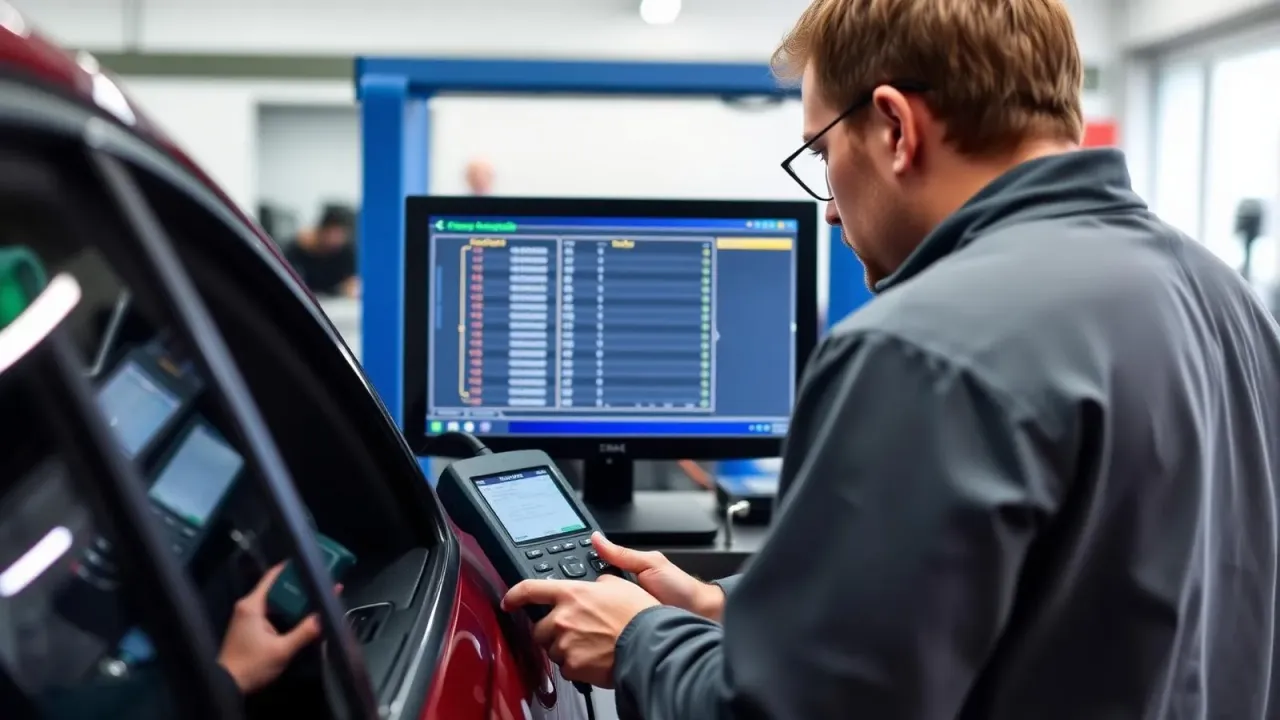
The free code reader at the parts counter is genuinely useful for one thing: telling you that the check engine light is on for a reason. That is where its diagnostic value ends. We see customers every week who got a code, bought the part it pointed to, and are still chasing the same problem two parts and 400 dollars later.
What a code is, and is not
A diagnostic trouble code is the car's way of saying "this circuit, this sensor, or this system is reading outside the expected range." It is not a diagnosis. It is a starting point. A P0420 (catalyst efficiency below threshold) does not mean the catalytic converter is bad. It often means an oxygen sensor is lazy, or there is an exhaust leak upstream, or the fuel trims are wrong because of a vacuum leak.
Why parts stores cannot really diagnose
The handheld code reader at the counter pulls codes and clears them. That is it. Real diagnosis requires:
- Live data streaming from the car's computer
- Bidirectional control to test individual components
- Lab scope readings for sensor patterns
- Smoke machine for vacuum leaks
- Fuel pressure gauge, leak-down tester, compression tester
- Years of pattern recognition on what each code actually points to
The parts store has none of that, and the people behind the counter (who are usually doing their best) are not trained to diagnose. They are trained to sell parts.
The "parts cannon" trap
The pattern goes like this. Code says O2 sensor. Customer buys and installs an O2 sensor. Code returns. Customer buys a second O2 sensor (the other side). Code returns. Customer buys a catalytic converter. Code returns. Customer brings it to us. The actual problem is a small exhaust leak that takes 20 minutes to find and 40 dollars to fix. That customer just spent 600 dollars and three weekends and still has the original symptom.
What real diagnosis costs and saves
A proper diagnostic at our shop runs about an hour of labor. Sometimes we find it in 15 minutes. Sometimes a hard intermittent takes longer. Either way, the bill at the end is for one diagnosis and the right part the first time, not a parade of wrong parts and wasted weekends.
When the parts store is genuinely useful
- Confirming the check engine light is real and not a glitch
- Reading codes you can then bring to your trusted mechanic for context
- Buying parts when you already know what you need
- Getting a battery tested (most counters can do a real load test)
The honest pitch
Use the parts store for parts. Use a real shop for diagnosis. The ten minutes of free code reading at the counter is a starting point, not an answer. When the answer matters, pay an hour of labor to get it right. It is almost always cheaper in the end.
Legacy Automotive Team
Boulder's NAPA Gold Certified shop since 2013. Real techs, honest writing, no AI fluff.